
What do farms need for field sanitation?
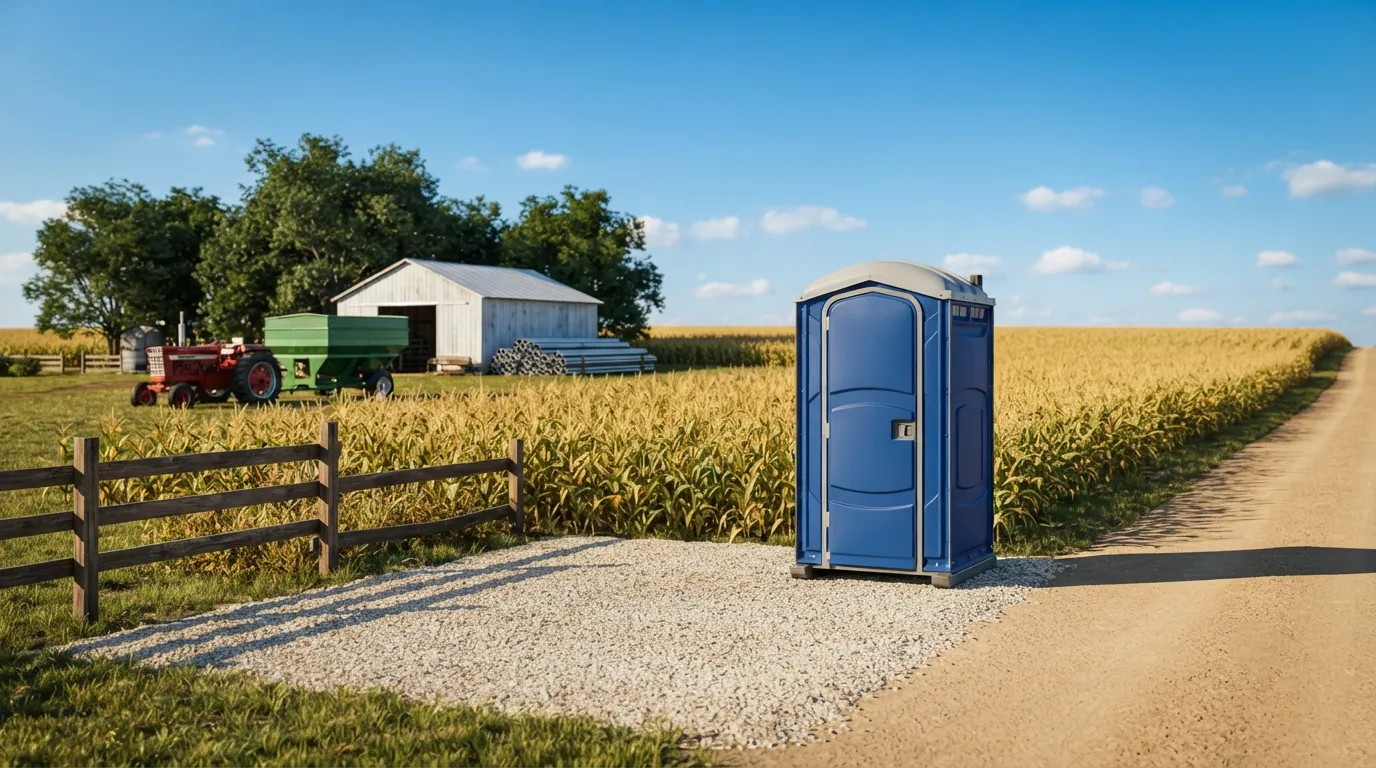
Field crews spread out across acreage, so the walk to the nearest unit matters as much as the unit count. OSHA 1928.110 sets the baseline: one toilet and handwashing setup per 20 workers, positioned within a quarter mile of wherever people are actually laboring, plus a supply of potable water under 1926.51(a)(1). That means a single standard porta potty rental placed at the barn might satisfy the letter of the rule and still fail the walk-distance test if your crew is three fields over. Most row-crop and hay operations around Bossier City end up staging two or three units at field edges rather than clustering them at the entrance, and checking porta potty rental cost ahead of time helps with budgeting for multiple units. If you are unsure how many you actually need for your acreage and crew size, our porta potty needs guide walks through the math. Harvest season brings extra hands for a few weeks at a time, so a lot of operations rent on a weekly basis rather than committing to a monthly porta potty rental up front. Livestock operations have different needs than row crops. Handwashing stands out for anyone handling animals or applying chemicals, since 1926.51(f)(1) requires washing facilities specifically where herbicides, insecticides, paints or coatings are in use, and a lot of ag chemical handling falls squarely into that category.
How many units does a harvest crew or ag operation need?
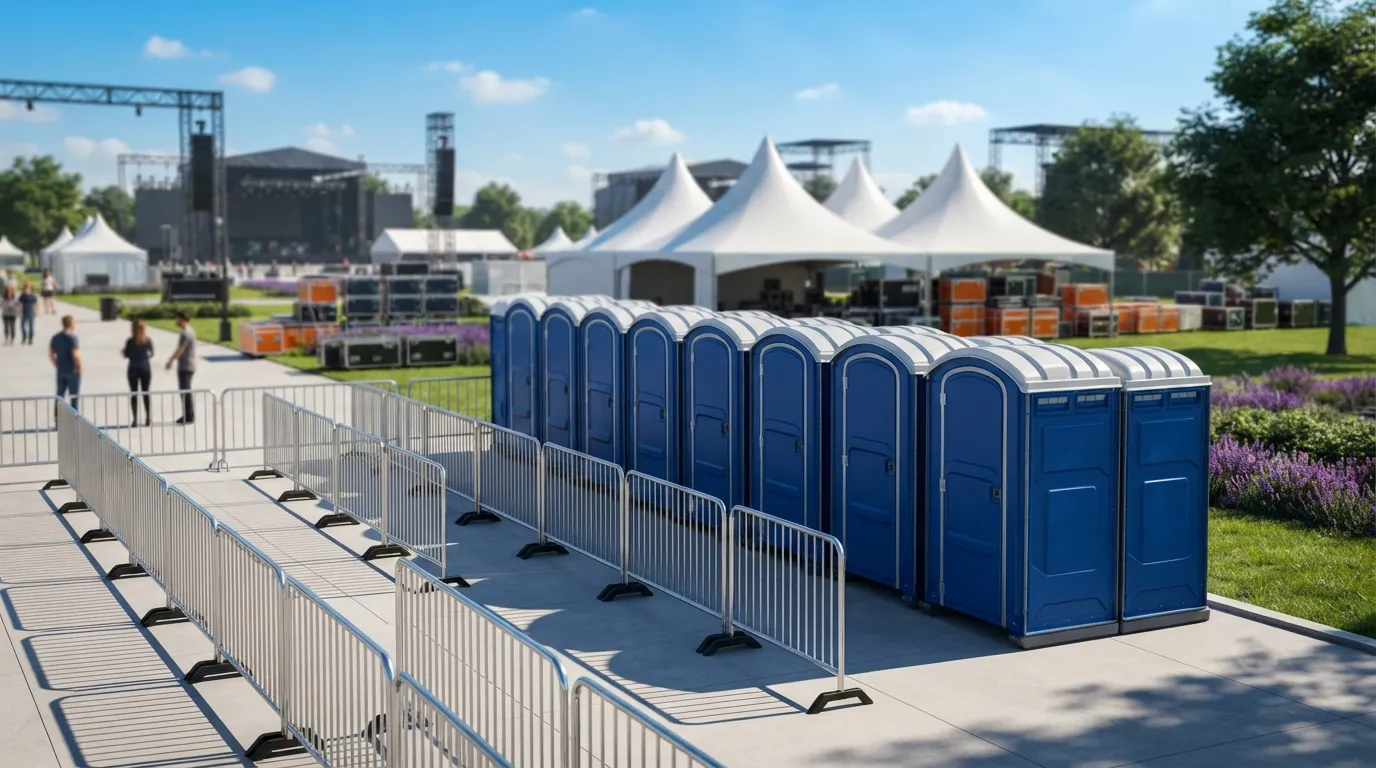
Crew size drives the count, and field layout drives where they go. A 15-person harvest crew clears OSHA 1928.110 with a single unit and handwash station, but spread that same crew across two fields half a mile apart and you need units at both ends, not one in the middle. Ranch and dairy operations running fewer than 20 people at a time can often manage with one porta john rental near the working pens, moved as the herd rotates, and some prefer a deluxe flushable porta potty for longer stays in one spot. Bigger operations, or farms that host seasonal labor housing, sometimes add a handwashing station separate from the toilet itself, since 29 CFR 1910.141(d)2 requires soap and towels or a hand-drying device at any washing facility, not just a water source. Hand sanitizer alone does not satisfy that standard. For farms near Bossier City that also host pick-your-own days or farm stand events, a portable restroom rental built for public traffic makes more sense than a job-site unit, since visitors expect something closer to what they would find at a festival restroom rental setup. Farms combining livestock work with public-facing events often end up renting both categories at once, one for the crew and one for guests, sometimes adding a restroom trailer rental for the busiest event days.
Where should units go on a working farm?
Placement on a farm is different from placement on a construction lot. You are working around irrigation lines, equipment turning radius, and ground that turns to mud after rain, not curb cuts and sidewalks. A roll-off or delivery truck needs about 60 feet of straight clearance to set a unit down, which rules out tight equipment yards or spots wedged between grain bins. Our porta potty placement guide covers ground stability and access in more depth, and the same clearance rules apply if you are also bringing in a roll-off dumpster rental for cleanup debris. Gravel pads near the working barn hold up better through a Louisiana wet season than a low spot in a hayfield. If your farm sits closer to Red Chute, about 7.8 miles northeast of Bossier City, or out toward Lakeview, 11.8 miles west, factor that drive into your delivery scheduling, since service routes run on set days. Farms doing seasonal labor housing sometimes add temporary fencing around the restroom area to keep livestock out, and a chain link temporary fence handles that without much extra cost, especially where a storage container rental also sits on site for tools and feed. For operations dealing with grease or wash-down runoff from a farm kitchen or processing shed, grease trap pumping is worth scheduling alongside your restroom service rather than as an afterthought.
| unit | duration | typical price |
|---|---|---|
| standard | day | 150 |
| standard | week | 200 |
| standard | month | 200 |
| ada | week | 185 |
How often do farm restrooms get serviced?
ANSI/PSAI Z4.3 sets the baseline at one service visit a week for up to 10 users over a 40-hour week. Bigger crews or hot months push that to twice weekly, and our how often are porta potties cleaned page covers the details. Ask about a servicing schedule that matches your actual crew size, not a flat default.
Can I rent just one unit for a small farm crew?
Yes, if your crew stays under 20 workers and the walk to the unit is under a quarter mile, per OSHA 1928.110. Smaller operations near Bossier City often start with one standard unit and add more during harvest peaks.
Do I need a handwashing station separate from the toilet?
If your crew handles pesticides, herbicides or coatings, yes. OSHA 1926.51(f)(1) requires washing facilities in that specific case. A combined portable sink rental unit covers both needs without a second delivery trip, or a standalone hand sanitizer station rental can supplement it between services.
What about restrooms for farm events or agritourism days?
Public-facing farm events need different units than field crews. Check event restroom rental options, which are built for foot traffic and include ADA-compliant choices under ADA Standards 213.2.
How far in advance should I book for harvest season?
Book at least two to three weeks ahead, and see porta potty rental checklist for what to line up before delivery day. Harvest timing shifts with weather, but service routes fill up fast across Bossier City and neighboring areas like Shreveport, 10.5 miles southwest.
Next step
Get a delivery date
Tell us the address, the dates and the headcount. We size the order and confirm the route.